
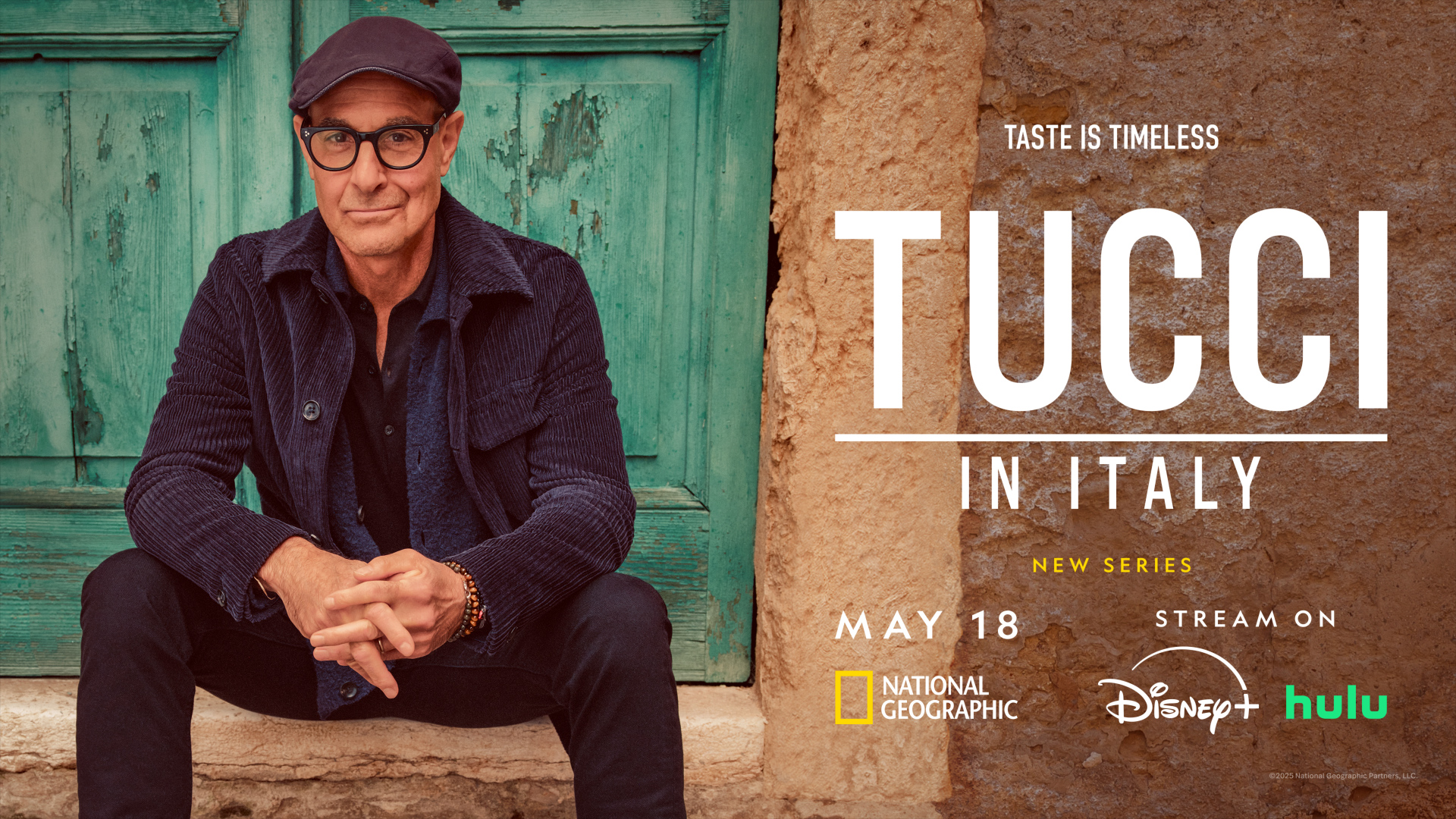
In Searching For Italy, Stanley Tucci took us to the heart of the big hits in Italy a country I love dearly. In Tucci in Italy, he takes us to the skirts of the land that is forever synonymous with its food; a place where food is as crucial an identity as the person itself. He delves into the creases of the land as it were. Whilst in Firenze we see the people who are daring to dance outside the circle of tradition when it comes to food but also celebrates the foods that were once reviled by the rich as being poor people’s food. When he tries the tripe, I am taken back to Lagos a place where tripe featured heavily in the diet; matter of fact I still eat it today, offal that is. It challenges us to look to merge the past with the present whilst putting our own stamp onto history much like the past did.
Identity is strong in Italy, a place where, as he mentions in the opening, the shape of your pasta informs people of where you’re from. So ingrained is food to a country that it is impossible not to explore the origins and stories of the country through its food. On the other hand, it also challenges the closed societies who struggle to let people in with a take on the cuisine that may destabilise tradition. There is community and conviviality when you see the Contradas dine together post Palo race, putting on dinners only possible through donations for thousands of people in their locality. It is the coming together of people, a communion regardless of the place in the race and Italy. Towns like Siena lends itself to the possibility only because of its association of food and persons. Where ancient traditions are forged because these will last another thousands of years feeding thousands of people.
From foragers to fishermen, the youthful chef trying to keep traditions alive, to the Sunday dinner ever so particular there is a need for the past and present to remain synonymous with each other for longevity. Traditions are not simply jettisoned, whilst newness is finding its way through. There is still a space for innovation when he visits Da Vittoro in Lombardy to see the first vertical farm adjoined to the restaurant that circumvent mother nature to create its own conditions for herbs to grow… I don’t know about this to be honest because when it comes to food and eating in season, I am one for mother nature playing her part because what is the rush? In any case the food seemed to be innovative if a little techy… make of that what you will, but this is what I mean when I say it is about finding a way for the past and present to prepare us for the future of food and what it means for the days to come. Because in the very next breath he takes us to the Autogrill and we get a behind the scenes look at how places like these, with their roots in the days of the Italian boom remains relevant today. And then it’s off to have caviar and pasta and the organic way it all comes together to reveal one of the most decadent experiences in the series.
Tucci does not just stick with the highfalutin, he talks to immigrants who have held up traditions and how the ways of life have held up in the face of opposition. It also states quite definitively the importance of these communities to the economy. It is not a community of strangers as some would have you believe immigration is, but a community of people with a shared love of life, tradition and one another. Sikhs make up about 50% of the dairy sector in Lombardy; they come with their own styles of farming that only enhances the lives not only of the cows but the farmers and in so doing make a crucial economic contribution.
When they tell you immigration erodes nationality, please know this is false.
I talk a lot about traditions because it is important to the culture of the Italians, but it does not survive without openness especially in a world that would seek to tell you that because we move in from other lands, we are somehow not worthy. An influx of Punjab workers has helped saved a region and its identity.
In this series Tucci also highlights and celebrates the cultures that keep making Italy the place it is, seeing it through the eyes of the immigrant whether you are Punjab or Austrian or a Pakistani who has found community through food by breaking bread with the locals who have opened their hearts and their country to them.
Where is home? What is home? Where do we belong? Besides the food yet through it, this is what Tucci seeks to highlight not necessarily answer because there are bigger motives at play like various governments with their own agendas of the day.
These are the moments the programme comes to life for me, seeing immigrants on the screen hearing their stories and how they keep their own culture alive in a country with such a strong identity and presence rooted in its cuisine.
Franz’s story of how his grandfather came to live in Italy in a daring of his life is one that moves beyond the screen to the personal and highlights the human. The recipe he keeps alive is one created by his grandfather when he had to survive four years in the woods fleeing for his life; having left his pregnant wife behind. The soup he makes from 25 herbs is from a recipe created by his grandfather in those years of survival.
The story of Rahma who found home in a land of immigrants in Bolzano that is heavily Germanic influenced is another such story that really makes the country shine as she makes injera bread whilst waiting to welcome other immigrants and locals. It is open and honest and real and raw.
Traditions are forged because the ones who came before us left a little part of themselves behind; you take what works for you and leave the rest for those coming behind you.