
Masterpiece is a word that gets thrown around too often for it to mean anything these days but in some respects it is a befitting word, maybe even inadequate.
La Primavera is, in my opinion, the masterpiece when compared to Venus. The Flat Iron building in Manhattan is an architectural masterpiece. Tutu by Ben Enwonu is a sublime piece of art, right up there with Girl with the pearl earring by Vermeer, you have not lived until you have drank a daiquiri in Havana… masterpieces of life.
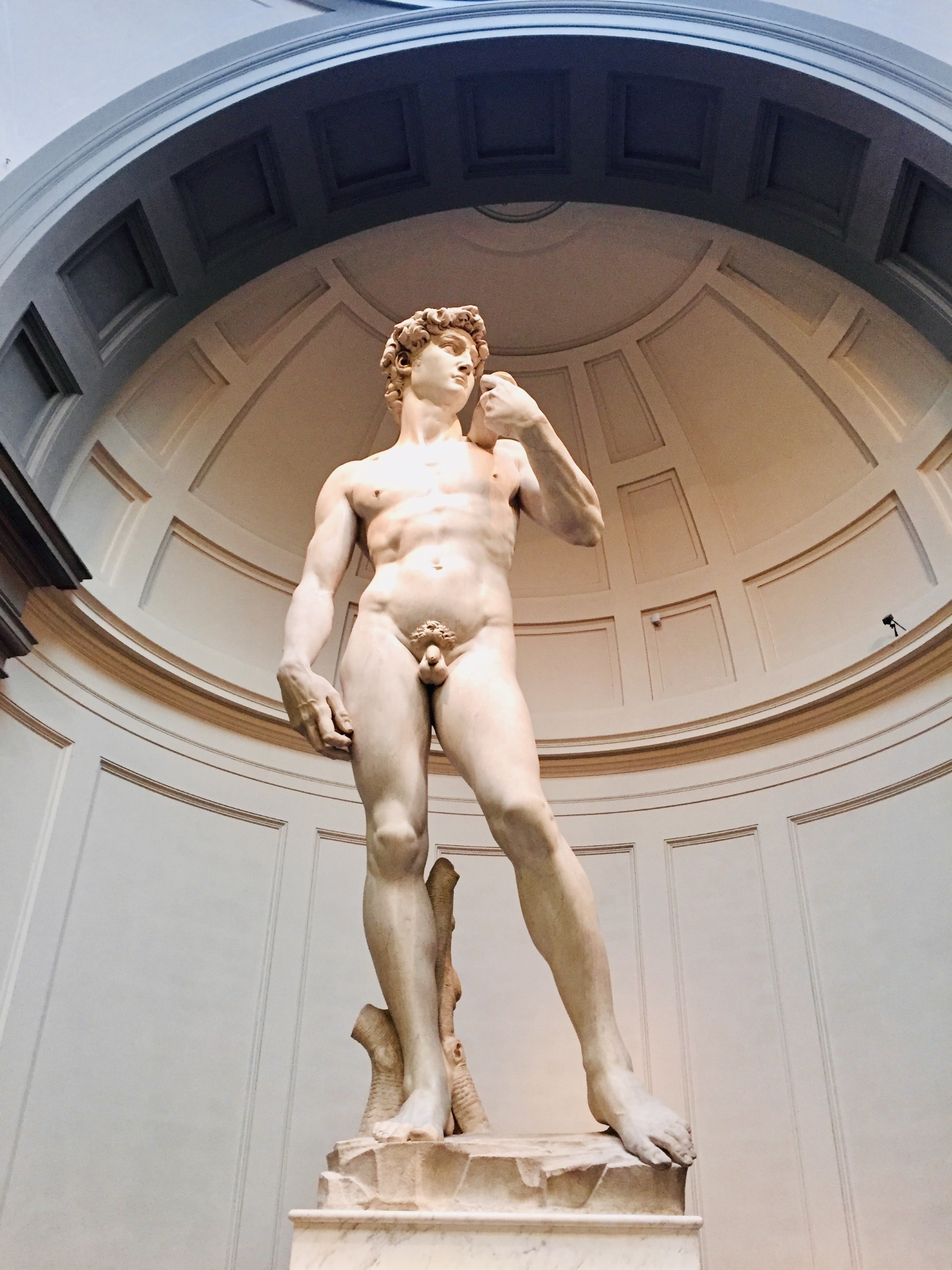
And so it comes to the David, a masterpiece in every aspect. I saw this sculpture when I was old enough to appreciate it and I am forever thankful because for at least two hours I stood and stated in awe. To see it in real life is to be stunned by how one mind carved up this piece. Using a single block of marble from the Carrara region, Michelangelo believe that trapped in this stone was a work of art waiting to be revealed, a live form with all its crevices and emotions just waiting to be made known to the world; characteristics he could see right through this stone.
Artistic much?


Being in the presence of David will take your breath away; not least because you are surrounded by other sculptures but he stands out, of course he does, he is the main attraction but he has a presence that immediately makes itself known even before seeing the sculpture; it is both alluring and divine; it represents David in the biblical tale so it tracks, in earlier depictions of David he is shown victorious over the giant, like Donatello’s bronze statue depicts. But in Michelangelo’s rendition David is before combat, contemplative and weary; brows furrowed, mouth tight, stance tense, an energy radiates through his body as you can see from the veins depicted in his right hand on one end of the sling whilst his left hand holds the sling over his shoulder. It is both a calm strength and a frisson of tension, knowing the battle ahead of him.
David stands in contrapposto with his weight on the back right foot while his left is forward. Contrapposto shows the connection between the engaged core and its through line to the furrow of his brows, to the tips of his hands holding the sling, his only weapon with which he is about to go into battle. It is more about the psyche of the sculpture than the sculpture itself if that makes sense, because he appears relaxed whilst he is anything but. His left side appears larger than the right, his hips and torso are at an angle, whilst it appears his leaning right leg is the one doing the heavy lifting where the sculpture rests, the weight of the statue rests on the stomp behind the leaning leg; bronconne; a technique used by sculptures to support the weights of their work.
David represents the Florentine victory; in Donatello’s bronze iteration of David with Goliath’s head beneath his feet in victory was presented by the artist to Cosimo Medici and when the powerful family fell, the statue was carted off to Piazza della Signoria and the family exiled. And Michelangelo’s David, having turned down the armour presented to him by the King before his fight with the giant, represents a victory on their, Florentine, terms absence of power and influence of those in positions to wield them.
All art means something grander in their day and remain well beyond their time; the David is not simply a masterpiece by an artist, it is the defining voice of an era, a movement in a moment and much more. When in Florence go by the Academia and see this spectacular sculpture.
Galleria dell’Accademia di Firenze | Via Ricasoli, 58/60, 50129 Firenze FI, Italy