
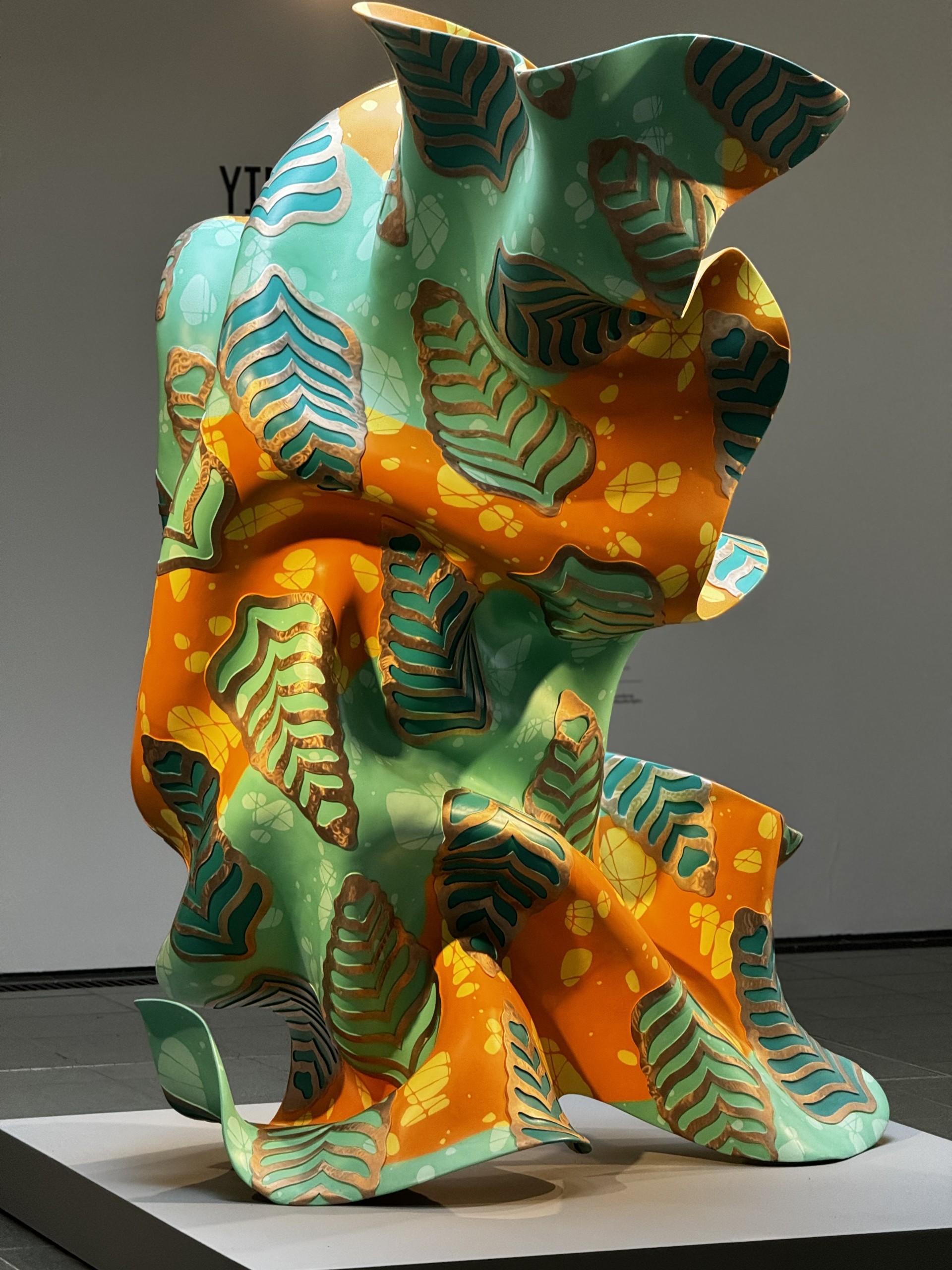
Suspended States addresses the suspension of boundaries, whether psychological, physical, or geographical — all boundaries of nationhood are in a state of suspense. This is an exhibition in which Western iconography is reimagined and interrogated, at a moment in history when nationalism, protectionism and hostility towards foreigners is on the rise.” – Yinka Shonibare CBE
This is Shonibare’s first solo exhibition in London for 20 years and this exhibition interrogates the idea of authority, investigates the vestiges of power and the symbol we attach to it. When is a statue not simply a statue, what onus do we place on these symbols of contradiction; this borne of the whole Colston debacle following a summer of protest in 2020 when there was a reckoning in how the British show deference to the colonial legacy and how that deference is foisted on a largely subservient public. How do these symbols infiltrate our lives and what level of importance do we ascribe to them because of the predisposed notion we have to simply subjugate ourselves because of class, race, sex or other othering notions of being. How does the power we ascribe to these symbols infiltrate the day-to-day interrogation of institutions? If we ever do push them.
There is also the impact of colonisation, its interruption on tangible and real growth and what might have been if countries were not “founded” only to be pilloried which is one of the root cause of mass migration as a long-term impact of these interruptions, ecological erosion to our environment and the impact the small nations must pay for the benefit of large countries that continue to exploit the concept.
The legacy of conflict and the dubious dance around peace, to whose benefit and to what outcome?


What is African and what was foisted on Africa? The Dutch print ever prevalent in Shonibare’s work takes centre stage here; from the war library where it is used as book covers, to the gallery where Shonibare cloaked colonial big beasts like Churchill, Kitchener and Queen Victoria in these prints, further throwing into question the importance of such figures in the interruption of the growth of Africa; a continent that was before they arrived. Posing a question of identity from its country of origin to its adopted country which it is now synonymous with.
Dutch wax prints, Ankara as we call them, represent a complicated relationship between Europe and Africa; these were inspired by Indonesian batik prints that were then mass produced by the Dutch and sold on to British colonies in Africa. It has since been adopted as an African print and they cover every book in the war library of the exhibition. War bound and cloaked in complication and how they subjugated appropriate the narrative of its origin to shape its future and new identity… It is the only way, I would hazard a guess or an explainer, to reshape the narrative of the Ankara print and its popularity in the African wardrobe; the only way it can be justified to use them where the colonised become the master of their own destiny. If that makes sense.


The other part to this exhibition happens in a dark room in the rotunda where seventeen small scale buildings are set on low tables exterior is painted in black, but the interior is illuminated and on close inspection covered with the Ankara prints. These buildings represent some well-known buildings; UNHQ in New York, Cathedral of Saint Elijah in Aleppo… these are places of refuge, but the interiors have also been laid with these problematic fabrics that only add that layer of complication and the continued interruption to finding lasting peace inside of them. It was meant to be a safe space but even so, our thoughts, our prayers, our hopes know no rest because we are reminded of conflict that was not of our making, one that snatched children away from their motherland long before their time, that reeked such horrors and blighted stories. Even the religion that was brought to African shores are only to be viewed with scepticism. The spines of some books in the war library tell us of the conflicts and the lessons from the conflicts, others remain empty awaiting their titles of the next conflict and in so doing ensuring the vicious cycle of a world circling the proverbial drain of conflict brought on by others. The questions raised here question the socio political and economic relationship between Africa and Europe using works of art and a reference to history and literation. Exploitation of these new worlds furthered the luxurious lifestyles of these explorers, harming the environment through roots of colonisation. If in doubt look at the recent havoc of Hurricane Beryl has caused on the Caribbean Islands, small countries with nary a carbon footprint bear the brunt of a Western world that insists on ignoring the warnings and signs of a climate crisis on the horizon.


There is a lot to unpack here and Shonibare is absolutely at the forefront of this conversation often infusing his interpretation on art and structures of authority. Willing to deconstruct what the west would have be the version of truth they peddle out. He uses well known Ankara as an inside joke almost and as a point of reference for how the growth and freedom of Africa was interrupted by forming a new narrative in the form of the Dutch wax.